Showing posts with label Greenfield Center NY. Show all posts

April 23, 2023

A Strong Foundation


A Strong Foundation
By John R. Greenwood


The photo above may appear average and unremarkable. Still, as I knelt there this April morning, the view reminded me of my personal foundation. Growing up in a small country village surrounded by a supportive community proved to be one of the most valuable contributions to my life. Whenever I begin to dissect what true happiness is, I inevitably return to my roots. Not simply family roots but those of my youth in general.


There isn't a day when I don't refer back to a face or story from my early life. Grade school classmates, backyard adventures, scout meetings, tree climbing, hay fort building, and visions of the old swimming hole all surface. When it's quiet with no outside distractions, I can visualize the endless list of people who strengthened my foundation. The obvious are parents, grandparents, aunts, uncles, and my dear sister. Then the surnames of the childhood families that added mortar to that foundation flow like water: Shay, Dake, Atwell, Davis, Gibbons, Cornell, Baldwin, Frasier, Hodges, O'Donnell, Rumpf, Panton, Lindahl, Bootier, Levo, Orisesk, Barney, Brown, Wheatley, Allen, Claydon, Gordon, Cote, Kahl, Sherman, Hall, Sesselman, Kostka, Bowen, Cline, Schwartz, Hurd, Smero, Koptula, Homiak, Pasmik, and Jones, all just a fraction of the mountainous collection of contributors to my life. I could fill pages with the names of people who've positively influenced me. Every day I channel an event or lesson I've experienced. Even the painful or uncomfortable ones have meaning and purpose in some remote way. How lucky I've been to have lived in the time and places that I have.

I saw that when I stood up and looked at my freshly painted foundation. Those names began popping into my head, inspiring me to write them down. As I write this, the gentle rain falling outside has given me a moment to ponder each name and attach a memory. It's an activity that I practice often and one that gives me immense pleasure. I know many people spend their lives searching for happiness via material things. Although a new car, exotic vacation, or motorboat can bring you short-term joy, the list of names above could only be obtained by growing up where stone foundations can still be found today.

Thank you, the 1960s and Greenfield Center, NY.


September 29, 2021

RIP Brookside Dairy


RIP Brookside Dairy
John R. Greenwood

Hall's Brookside Dairy
Wilton Rd.


I lost a dear friend today, and I'm having a hard time with it. A few days ago I was told the remaining buildings on the old Brookside Dairy property would be torn down. Praying they were mistaken, I drove by the farm on my way to a Greenfield Historical Society Event. The Brookside property had been cordoned off with caution tape and there were two demolition dumpsters sitting next to the main house. Personally, I think crime tape would have been a better choice. It was Saturday morning, and no one I spoke with knew anything about what was happening at the old farm.


Jump ahead three days. I received a text message that Captain John St. John's 1789 home was no longer standing and that it was on its way to the landfill. Ironically, there is a drawing of that same home on the cover of a long-forgotten 1970s publication titled "Greenfield Heritage Resource Inventory." On page #3 of that Heritage Resource Inventory, under a section titled, "AN EVALUATION OF WHAT THERE IS IN THE TOWN," is the following paragraph under HISTORIC RESOURCES:


A detailed analysis of the history of the area and its architectural record is given in chapter one. Some forty structures were felt to have historical significance, and the report isolates each one, shows its importance, and urges a general program for preservation and enhancement of these areas. 


Guess which structure is now a pile of dust—yes, #9. The Captain St. John house was in the top ten! 

Thank goodness they designated the Greenfield Town Hall #1.


Enlarged photo of Heritage Resource Inventory book cover


Captain John St. John Home 
later became Harold L. Hall's Brookside Dairy 


Description on Page #51 
Greenfield Heritage Resource Inventory 


Excuse my anger; it manifests itself when someone hurts or threatens someone close to me. Brookside Dairy was not a part of my family, but it played a significant role in who I became. Brookside Dairy taught me work ethic when I was still in single digits. It's where I learned how to build a hay fort and friendships. It set a foundation for a career in the milk business, which put a roof over my head and fed my family. It nurtured my lifelong leaning to the positive side of the road and my passion for saving and sharing stories of good times. It fueled my love of history and tightened my grip on nostalgia. Most of all, I learned the lesson of compassion. In the 1990s, Harold L. Hall shared an oral history of his life. You can find it on the Saratoga County Historical Center's website. He shared one story that stuck with me. He tells of a day in the farm's early years when he was sick with the flu and could barely move. He was in the barn milking when one of his immigrant neighbors came in the barn and saw how sick he was. He told Harold to go in the house and that he'd be right back. When he returned, he had others with him, and they proceeded to finish the milking and other chores. Harold seemed to pause in quiet reflection as he told the story.


I'm told that mold and vandalism riddled the buildings on the property and that the cost to save them would have been in the millions. That may or may not be true but what hurts the most is knowing that the people responsible will never experience the way I felt when I saw those two dumpsters. 


DOD 9/27/2021


At least we have a book cover to hold on to...


The Greenfield Historical Society's Chatfield Museum in the Odd Fellows Hall in Middle Grove is #24 on the Heritage Resource Historic Structure List. If you see a dumpster there tomorrow, call 911.


November 05, 2020

Cover-Up (A Greenfield Memory)

Cover-Up (A Greenfield Memory)

By John R. Greenwood 


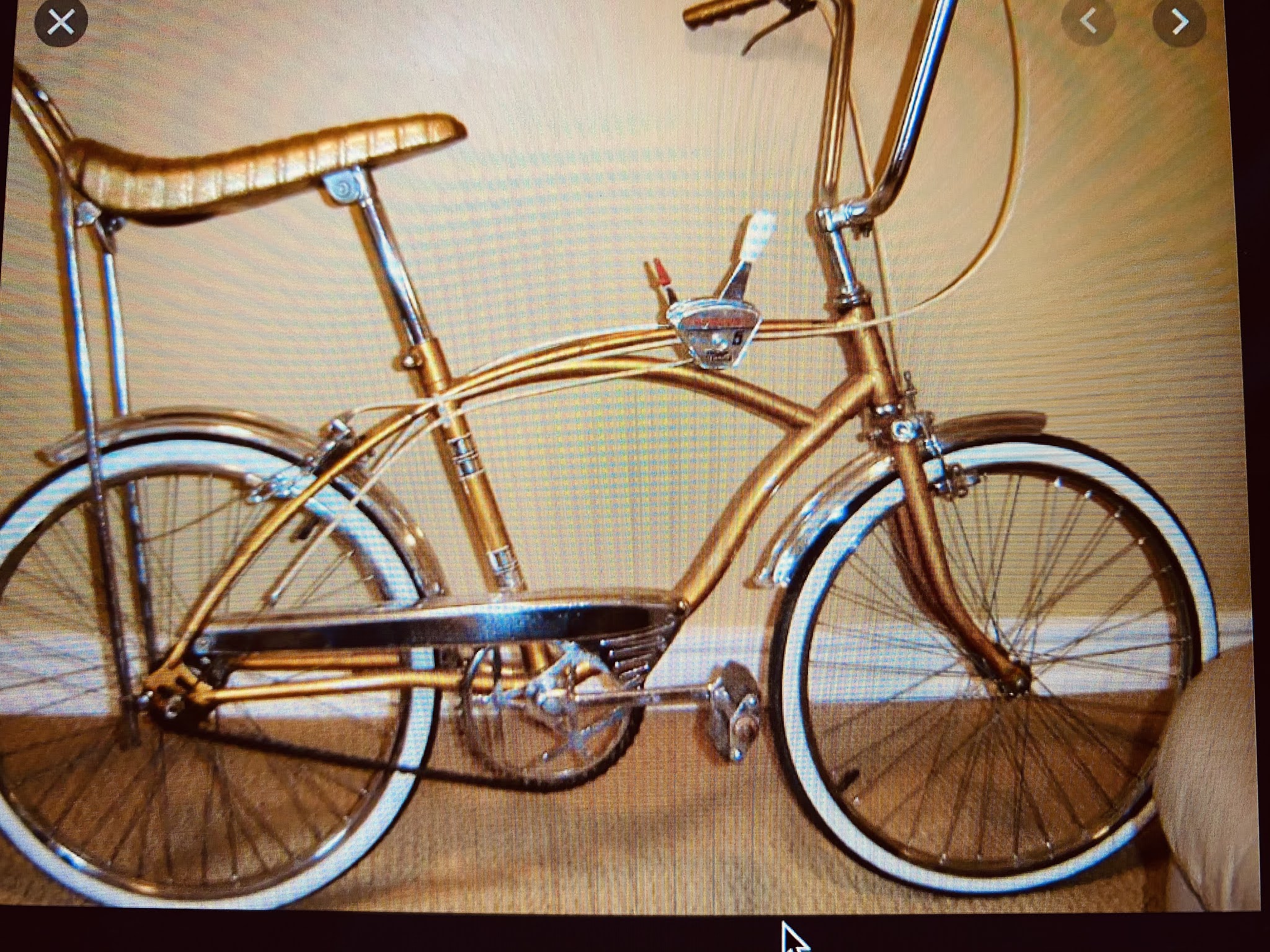
I want to share a father/son moment that took place in 1968. I was thirteen and had saved enough money for a new bicycle. I bought my Raleigh Rodeo 3+2 at Globe Supply(presently Soave Faire) on Broadway in Saratoga Springs. It was a stingray bike styled like the muscle cars of that era. It had a Hurst-like, 3-speed shifter on the frame in front of the seat. Next to it was a smaller shift knob, which gave you two more pedaling speeds. It was gold in color and my pride and joy. I parked it on its kickstand every night in the garage. Saturday mornings, while dad washed our International Scout, I would wash my Raleigh next to him.


My father instilled the importance of taking care of your things. The better the care, the longer they will last. I came up short a few times because I remember being on the receiving end of "That Look" after I misplaced or broke one of his tools. Parents hope that if a child buys something with their own money, they will take better care of it. Hope is just that. The chances of your child having the conscientious-trait is a crapshoot. Some get it; some don't. Most kids fall somewhere in between. I probably leaned more to the caring side because I feared "That Look" worse than a kick in the shins. 


In the 1960s, it was popular to ride your friends on the handlebars. They would rest their feet precariously on the small bit of threaded axle sticking out from the front tire. The other option was to let your legs swing free, which was much more difficult for both rider and the one pedaling the bike. It was also an excellent way to get run over by a car. My father was adamant that I do not try this with my bike or with anyone else's. I was a compliant son, and I was also much too afraid of my father to break that rule—that is until Glen came along. Glen was older, bigger, and wanted to get from point A to point B one day. He insisted that I provide a taxi service from the Greenfield General store to his friend Tom's house at the bottom of Cemetery Hill about a quarter-mile away. Glen was the Eddy Haskell of our neighborhood. He was an instigator and possessed a larger than life personality. He was the type of kid that could get you in trouble quicker than a wink, but at the same time, his presence helped you remember those events with overwhelming fondness. On this particular summer day in 1968, everything above fell into place.


Because Glen was too big to ride on my handlebars, he strong-armed me into the role of hood ornament. Boys at thirteen are about as coordinated as a giraffe on skates, and I was no exception. A few hundred feet up the road, my sneakers slipped off the axle bolts, and my toes got caught in the spokes. Glen, the Raleigh Rodeo, and I went ass over tea kettle. When the dust settled, a friendship and a brand new bike were in a bit of a pickle. I remember having to push my bike a mile back to my house, the whole time thinking about how mad my father was going to be. He would be upset about the bike, but even more so because I disobeyed him. The front wheel was a bent mess. The spokes had a pretzel quality to them. 


What do I do? 


You do what any red-blooded thirteen-year-old would do—cover it up! This virtual cover-up included an old blanket. Like a reprieve from the governor, it would buy me time to devise a brilliant scheme. The words "brilliant scheme" and "teenager" mix like oil and water. It did take a couple of days for my father to decipher why I was walking the mile up the road to the village versus riding my brand new $70 bike. Fathers are more observant than we think. My teenage sons learned this factoid about the same time their father did. 


"Why is there a blanket over your bicycle?"


Here's where you begin to weigh your options heavily. I didn't have enough time to concoct a viable lie. Even if I had (my wife will confirm this), I'm a terrible liar—especially if she or my father are involved. It was time to plead for mercy. 


"Um, I, I, well, uh, I messed up." (add tears here) 


Here's where parenthood takes a moment of silence. It's a silence that doesn't pay dividends until your grown children recognize the honesty you instilled in them. In my case, it took a couple of days and an eagle-eyed father to bring it to the surface, but it proved that honesty is the best policy no matter what the outcome. 


The following Saturday, dad loaded my Raleigh Rodeo, with the crumpled front wheel, into the back of our Scout. The two of us took it down to Globe Supply and dropped it off for repair. A week later, after putting several miles on my Converse, we returned to pick it up. I'm not sure who paid the bill, but my parental guts tell me it was the man whose "look" is all I ever needed. It was all that was necessary. 


Stories like this filled my teens and my life. 


Man, I miss my father. 


February 10, 2019

The Chair

The Chair 
By John R. Greenwood 


This story is about more than a chair. This simple little antique ladder-back contains a lifetime of family history, family friendship, and family memories. It has traveled around Saratoga County for its entire life. I don’t believe the chair was intended to be a family heirloom at first, but based on the journey it has taken since the 1960s that is what it has become. 

This story was revitalized recently when I received a phone call from Judy (Atwell) Cleveland. Judy’s family lived adjacent to ours growing up in Greenfield Center. She called to tell me she had a chair that my parents had given her when they were downsizing to an apartment back in the early 2000s. She described it briefly and asked if I remembered the chair. At first, I didn’t, but as she described where it sat in the house I was finally able to visualize it. Because Judy knows I wax a little nostalgic, she thought I might like to keep the chair in the family. I knew my grandfather had refinished the chair and given it to my mother and father. He was a skilled antique furniture collector and refinisher and did dozens and dozens of pieces after he retired. What Judy told me that I didn’t know, was that my grandfather had also re-caned the seat himself. That is no simple task as you could imagine. As a kid growing up, it was just another chair against the wall in the living room. Now, with the additional knowledge of the seat, along with the fact that someone had taken such good care of a part of my family’s history, the chair began to take on an entirely different look. She told me the caning was very brittle so the only one allowed to sit in the chair for the last several years was a cherished Teddy Bear. I hope Teddy didn't commandeer Judy’s husband Ken’s recliner now that the ladder-back was gone. 

I told Judy how grateful I was for her thoughtfulness and a few weeks later I stopped by to pick up the chair. 

This is where the story really begins. 

Judy and Ken live in Judy’s childhood home. The home I’d visited hundreds of times throughout my Wonder Years. The very minute Ken opened the back door I was flooded with a wave of fond memories. The stories told around their kitchen table. The beer induced pranks that our fathers played on one another. The laughter and good times that were generated in that house and neighborhood began to overwhelm me with emotion I couldn’t control. I could see my old backyard from the kitchen window, the grove of pine trees where I covered myself in pitch and boyhood joy. There just a few feet away was my old minibike trail that led to old friends that enriched my life. Out the other window stood two giant maples that hosted a neighborhood swing that seemed to swing so high you could touch the treetops. Just a few yards west was the old firehouse our fathers built and manned as volunteers for decades. The firehouse where I competed in a Pinewood Derby and received my first Merit Badge. The firehouse where my wife and I danced our first dance as husband and wife. The firehouse where I learned how to drive a firetruck and roll up a 2-inch canvas firehose. On the other side of the stone wall was the field where our fathers flooded the village skating rink late into the cold night and “The Hill” where toboggan runs lasted forever. The field where we sped around in old field cars was now a forest, but the sight of my friend Rick, rolling a Volkswagen Bug over and over with nothing but a lap belt and his Bell Motorcycle helmet on, was as clear as the smile on my face. The dirt path where I learned to peddle my first bike was right outside the door. The country store where I got my first cavity and cashed my first leaf raking paycheck. The store that had a wooden bench out front with my initials and a hundred others carved all over it. There was a time I knew every person, in every house, in every direction for a mile or more. Our old cabin that a handful of pre-teen boys built themselves, lay just out of sight, in the woods on the other side of the hill. The cabin where we played tag in a scotch-pine field, in the light of the moon, laughing until our sides hurt. The cabin where we hid stolen pumpkins and warm beer. The cabin where we told jokes, farted and watched old Shep singe his wagging tail on the fire-red wood stove. Vision upon vision came rolling over me like a freight train. As I tried to thank Ken and Judy for their kind gesture of returning that little ladder back chair I started to well up. I couldn’t stop, I tried. It wasn’t sadness, it was gratitude beyond the words. I was truly blessed with an unbelievable youth and life. The friends and experiences I’ve accumulated are priceless treasures. I can’t tell you how lucky I feel for having enjoyed the people and stories of small-town life. The chair, the gesture, the opening of that backdoor was a gift too large for words. 

Judy and Ken, Dot and John, Diane, Jackie, Rick, Gary, Brian, Bill, Chris, Paul and Jean, Randy, Greg, PM, Duane, Kevin, Bob, Bill, Barry, Harry and Edna, John and Dutch, Bill and Pearl, Doug, Dot and Bill, Charlie and Philly, Perrin, Brad, Chip, the list goes on and on. Thank you, thank you for the friendship, the mentoring, the meals, the open doors, and watchful eyes. 

Thank you for the chair, the memories, and the time…


John  


October 09, 2017

Forgotten Farms; A Film You Won't Forget

Forgotten Farms; A Film You Won’t Forget
By John R. Greenwood


I got lucky. 

A few weeks ago I was browsing the Skidmore Events Calendar looking for upcoming lectures or exhibitions. An upcoming screening of the documentary film “Forgotten Farms” at the Gannett Auditorium caught my attention. I’ve spent the last several years of my life paying close attention to those little taps on the shoulder. Stumbling upon this film is a perfect example of why I don’t ignore them. 

Being the spouse of a Skidmore College employee entitles me to a Skidmore ID along with an endless list of opportunities that I enjoy taking advantage of. I’m grateful to Skidmore for those opportunities. I’m also impressed by the fervor in which they encourage the general public to participate. Providing a venue for the screening of the film “Forgotten Farms” is but one small example. 

This is a multipurpose piece. First I would like to publicly thank all those responsible for making the screening possible. Skidmore provided the venue. The screening itself was sponsored by Cornell Cooperative Extension, Saratoga County and its membership. Secondly, I want to thank the film’s director Dave Simonds and producer Sarah Gardner for making such a beautiful and eye opening gem. Thirdly, I want to encourage others to seek out the next screening so that you might enjoy the film as much as I did. Bring an open mind—leave with a renewed view of your food, milk, and dairy farming neighbors. I’ve enjoyed food, chugged my share of milk, and admired dairy farmers all my life. This film didn’t change my opinion—it sure did reinforce it. 

Rather than focus on the struggles dairy farmers face, I want to emphasize the need for the general public to support and encourage their survival. I’ve lived my life on the fringes of dairy farms. I spent the very best years of my youth in the early 60’s making hay bale forts in the haymow of Brookside Dairy in Greenfield Center. As a child you only absorb the fun that exists on a working farm. You recall sitting in the shade of a large maple at the farms entrance sharing lunch with the men who’d already been up for hours milking. You got to ride through the fields on the hay wagon, oblivious to the work that went into getting the hay from seed to bale. You ran free like a farm dog from one adventure to another never understanding the complexity and sacrifice going on behind the scenes. Not until I’d logged ten or fifteen years working in a milk processing plant, peddling milk, and raising a family did I truly understand a 24/7/365 working lifestyle. You mature quickly when the fuel bill comes in your name and the winter temperatures freeze the half gallons of milk on your truck. When I look back at my work life it pales in comparison to that of a dairy farmer. Most of my work life I had health insurance and a retirement plan. Even during the ten years I owned my own business I always seemed to have enough money to do the things I did find time for. Being a dairy farmer is another story. Every acre comes with a sore back, little free time, and no instructions. The film “Forgotten Farms” spells out the challenges of today’s milk producers in a way that emphasizes their pride and love of doing something they can’t always explain. I see it as a ground level embrace of independence. The difficulty lies in their lack of control of the world outside the stone-walled boundaries of their farms. They are at the mercy of consumers and corporate America. Watching this film acknowledged and highlighted the lessons I’ve learned in the last several years in my job which falls dead square between the two. It is an interesting place to make a living between the farmer and the place that picks up their milk and puts it on the counter for the consumer. My chest carries the logo of my employer but my boots and responsibilities carry the soil of the farm as well. I’m fortunate to be able to enjoy the best of both worlds without carrying the burden that comes at the tips of either end. 

In a world where compromise is finding it a tough go, the dairy farmer has little choice but to bend until he breaks. They must continually reassess, readjust, and react to the problems everyone else has created. As I witnessed the integrity and resolve the farmers in the film displayed, my mind kept looping round and round in search of some light at the end of the tunnel. One thought kept flashing through my head. 

“We have to find a way to make a glass of cold milk cool again.” - John Greenwood

Like vinyl records and Sinatra, some things simply can’t be replaced. 

As I watched this wonderful documentary I was saddened by the lighter than expected crowd. It’s not surprising that dairy farms are forgotten. Today’s fluid interests lie in microbrews and wineries. The internet is bloated with negative press about diary products yet our children are guzzling caffeine and sugar laced energy drinks at an alarming rate. This isn’t a nostalgic whine about trying to turn back the clock to the good old days, it’s about common sense, good health, and our future. 
 
We need to look out for our farming friends. We will someday realize that no theme park can replace the sights, sounds and smells of a working farm. Driving by a freshly mown hayfield in late June and I’m instantly transported back in time. Back to a time when wading in a cold farm creek soothed you like a mother wiping your brow with a cool washcloth. I’m certain the first view I have if I’m lucky enough to travel north when I leave this crazy planet will be a green pasture surrounded by a moss covered stonewall, blanketed with a blue sky, and brimming with a herd of Holsteins grazing in the shade of a giant maple. 

I always carry a notebook and pen when I attend a lecture or presentation. Many times I use the notes to write a piece like the one you're reading here. As this film unfolded my pen never stopped. I jotted everything that stood out or spoke to me. When I began to compile my thoughts I noticed a distinct pattern. 

Here are several of my notes just as I as wrote them down. 
  • First couple of cows at age nine
  • Choice
  • My father was my biggest role model
  • Perseverance 
  • Dedication
  • “Everyday” Got to be there
  • “I had 40 hours in by Tuesday noon”
  • Animals need you
  • So many things
  • Weatherman
  • Businessman
  • Doesn't miss a beat
  • Don’t show up to play around
  • You adjust
  • You never know how long you're going to last
  • Each cow generates $13,000-$14,000 per year in revenue to the local economy. 
  • “The only business that buys at retail, sells at wholesale, and pays shipping both ways”      —JFK
  • "Good years, last a year"
  • Break Even
  • Challenge
  • Fuel, seeds, veterinarian, Workmen’s Comp
  • “Years to build, in minutes it was gone” — a farmer describing a farm auction
  • 11 million dollars in lost economy when a dairy farm goes out of business
  • Nice to drive by a dairy farm
  • Lose history—How we got here
  • Deep roots
  • Great, Great Grandfather
  • 13 generations
  • 2% feed all the people
  • They’ve been here for centuries—What are they doing right?
  • Gets in your blood
  • Keep going
  • “Class Issues” —Milk not part of the food movement 
  • Education v/s Stinky kid on the bus
  • Isolated 
  • Criticized
  • Invisible
  • Disparaged
  • Don’t care
  • Hopeful

The pattern I gleaned from watching Forgotten Farms and reading my notes is this; dairy farmers are the most dedicated, committed, knowledgeable, and hard working people on the planet. I’ve always known this to be true, but after watching this film and adding it to my 60 plus years of quiet observation it became abundantly clear. As the film came to an end the crowd remained politely quiet. I however stood up and clapped as loudly as I could. It was my private standing ovation. Yes, it was for the beautifully crafted documentary but it was also for my personal admiration of the work ethic and pride that goes into every delicious cold glass of milk I drink. Since 1974 I’ve fed my family, and paid my mortgage and car payments by picking up, processing, and delivering milk. Add to that the fact that milk is my favorite farm product and you’ve got yourself a real live milkman and dairy farm advocate. 

I hope everyone who reads this gets an opportunity to watch this film. I provided links to the Forgotten Farms website. In searching their site I found they provided dozens of links to other dairy and farm related sites. 


Bravo, Dave Simonds and Sarah Gardner! You should be very proud of this film.


"All my friends say, You should retire and do something you enjoy. 
Well I guess I've been retired my whole life." - Dairy farmer 


                 “There are three people that know how the cost of milk is calculated. 
                                     Two are dead and one doesn’t remember.” 


Forgotten Farms Website: http://forgottenfarms.org

Cornell Cooperative Extension, Saratoga County: http://ccesaratoga.org

Skidmore College Events Calendar: http://calendar.skidmore.edu/MasterCalendar/MasterCalendar.aspx


May 19, 2016

Henry's Birthplace

Henry’s Birthplace
By John R. Greenwood

I received a call recently from my cousin Henry. Henry’s retired now and lives in Florida. He was in Saratoga visiting his mother. He'd spent one day with his younger brother on a successful Lake Ontario fishing trip. Henry didn't call to tell me about his fishing trip, he called to ask a favor. You see, Henry was born on our grandmother and grandfather Kubish's farm. He'd read my recent story about my visit with the present owners of the farm, Ray and Carolyn Bouchard, and wondered if I could arrange for him to see the place. Like me, Henry hadn't been back there in over 50 years. Henry spent the first years of his life on the farm. His mother stayed with her parents while her husband was away in the Army. Because of that Henry had more history there than all of the cousins. He told me on the phone that his fondest memories were made on the old farm. Like me, Henry had spent years wanting to go back to see how it had changed. He had no idea just how much of our grandparents still remained on the property. Although I'd visited a few months earlier, there were still a few surprises that alluded me on my first visit. 

My call to the Bouchard’s was predictable. They opened their hearts once again and invited the two of us back without hesitation. We set a date for the following Monday afternoon and I called Henry to give him the good news. He reacted like a kid being told the family was going to Disney. I was equally excited about spending a few hours with a cousin I hadn’t seen in years. 

The weather hit the mark with a cool breeze and sunshine. I left work at noon and met Henry at my Aunt Jennie's house. This was another bonus, as I hadn’t seen her in quite some time. She closely resembles my mother so it always makes seeing her extra special. She doesn't get around like she used to but she’s sharp as a tack and always a pleasure to visit with. It was the highlight of my week. My cousin Tom was there too. He was mowing his mother's block deep backyard. We asked him to join us but he quietly declined. I think he knew this was his older brother’s moment and he didn’t want to disrupt it. I could see the anticipation growing in Henry’s eyes, it was time to head to Greenfield. Out to the old farm. 

Henry photographing our grandparent's headstone
On the way to the farm we passed the cemetery where our mothers parents were buried. We stopped for a minute so Henry and I could pay our respects. We both had our cameras with us and we simultaneously took a picture of the headstone of Joseph and Johanna Kubish. They’d both been gone since the 1960’s but I could see them standing there as clear as day. They were strong hardworking people and even though I was a young boy when they passed, I took from them a lifetime of memories and life-lessons--Henry and I both did. We didn’t say much at the cemetery, we didn’t need to. We each had our own favorite stories of Baba and Zeddo. I think we were both rewinding the reel for one more look back. It was all we’d wanted out of the day. We quietly got back in the truck and as we headed toward the road we began reading familiar names off the headstones. Each one brought a flashcard memory.

We turned back onto Wilton Road and headed east. 

A few minutes later as I turned into the Bouchard's driveway I could sense Henry's excitement. His eyes were glued on the old house in the distance. The leaves hadn't come out yet so it was slightly visible through the trees. “The driveway seemed much longer back then,” he said with surprise. 

Ray warned me on the phone he was working on the driveway near the house and that he had it all dug up. He has a large farm size tractor with all the trimmings to go with it. It's one of those big boy toys that’s the envy of any grown man. 

I parked at the bottom of the hill in front of the house. Henry unbuckled his seatbelt and was out of the truck before I could shut the key off. I understood, I'd felt the same way when I pulled in a few months before. 

Ray Bouchard and Henry Ebert 
Ray was on the tractor in front of the garage and spotted us right away. He jumped down and headed toward us. Ray may be short in stature but to Henry and I that day he was ten feet tall with the swagger of John Wayne. Henry stuck his hand out while Ray was still twenty feet away saying, “Thank you! Thank you for letting me see the place.” I think Ray knew instantly he'd given Henry a great gift. Two seconds later a smiling Henry had his arm around a smiling Ray and I snapped a picture. It was a Hallmark moment if ever I’ve seen one. 

While we stood there talking, Henry’s head was turning from side to side absorbing the scene like a video camera on a tripod. Ray’s wife Carolyn came out and invited us in. Henry was in Nostalgia Heaven. It got even better real fast. Ray had a collection of farm-finds spread out like a museum display. There were antique door handles a horseshoe, mason jar, and a hatchet.


There in the middle of the collection was the old hatch to the chicken coop. The hatch I spotted a few months earlier when I visited the farm. The same hatch my sister and my cousins used to crawl through as kids. The hatch to a 1960’s playhouse full of scabby kneed kids with splinters in their hands and cobwebs in their hair. Kids who would file those moments deep within their pockets to use a half century later for a nostalgia fix. 

There was another surprise in the collection that both Henry and I dialed in on. It was a small metal shovel made for scooping ashes out of a wood stove. It was handmade and familiar to both of us. We were certain it was crafted by our grandfather and used to clean the ashes from the stove. 

Another reel of memories rolled by. 


Ray and Carolyn provided a full tour of their home once again. This time there were four of us weaving from room to room smiling as the recollections we each had brought back voices, smells, and faces. The Bouchard’s raised a large family of their own there and had done many renovations with small children racing around underfoot. Now, those children brought more grandchildren back to begin their own mind based photo album. How lucky we all were to have that opportunity. I’m forever grateful for the hospitality of two generous people. 


I remembered the post and beam wall on the back porch that Ray exposed and rehabilitated. I didn’t want to be pushy but I knew Henry, the retired carpenter, would appreciate the work Ray had done. I wanted to be sure he got a chance to see it. My request had us on the porch in seconds and my hunch was right. Henry just stood there admiring the craftsmanship put into reviving the vintage structure that unknowingly lay beneath the siding of the house where he was born. For us, it was like standing before the Mona Lisa. 


Carolyn took a moment to describe many of the items they'd found in the cellar. One of them was this ceramic jug. It was a treasure all on it’s own. I would have paid a lot of money to leave there with that jug, but it wasn't for sale and it was right where it belonged. 


I knew Henry was anxious to get outside and walk around the property. When we did get out we both stood there imagining all the cousins running around and playing in the many outbuildings behind the house. The tour continued to the edge of the woods where Ray and Carolyn still maintain various gardens. The property has never been without gardens of some type. That made me happy. I think it made us all happy. 


Next we entered the museum of history. Ray’s refurbished shed slash workshop where Henry and I would both discover the best surprise of all; our grandparents old wood stove complete with clock and integrated salt and pepper shakers. 

Seeing that stove stopped us both in our tracks. 


It was even more thrilling to know Ray still used it to heat the shed on occasion. Every one of my cousins remember the stove and each one of us have our own favorite food that came off or out of it. 


There were classic Slovak soups with dried mushrooms my grandmother picked herself. There was Baba's homemade bread slathered with hard butter or homemade fruit jam. A flood of sights and smells filled the shed as we both stood there mesmerized by the cast iron and porcelain rock star we’d just rediscovered. 


I turned around and on the back wall of the shed was another museum like arrangement of saw blades, saws and other handmade tools the Bouchard’s had discovered on the property. It was a testament to the strength and self reliance of those who'd come before us. I was glad Ray and Carolyn had gone to such great lengths to preserve, not just some of my heritage, but the heritage of everyone who’d ever set foot on the acreage surrounding the old farm. I hope whoever follows the behind the Bouchard’s does the same.


The next step was to fulfill my promise to take Henry back to the Cronkite Cemetery. He didn’t need me to point him there, he knew exactly where to go. In fact he had a surprise of his own for me. He remembered the location of the old dump where my grandmother would send him with the trash when he was young. He assured me there would be some remnants there to prove his recollection. Carolyn headed back inside and Ray gave us full reign to explore to our hearts content. He had a driveway to attend to and headed back to his tractor. Henry and I headed in to the woods on the backside of the hill behind the house. I switched from guide to tourist and tried my best to keep up with Henry who was now zeroed in on finding an old dump filled with rusty cans and old ketchup bottles. We hadn’t gone far when Henry stopped and pointed to a pile of rusty metal in the leaves. There, just as he’d described, was the old family dump. There were bottles and other debris mixed among the leaves and rocks. It wasn’t a chest of buried treasure but it might just as well have been. We were instantly transformed into couple of boys on a backwoods adventure. The movie "Stand By Me" flashed through my head. I knew what Henry was thinking. He and I had been talking about old cellars and foundations on the way to the farm. He told me he had a professional grade metal detector at his home back in Florida. He said he wished he’d brought it with him this trip. I know he was really kicking himself now.


By now we were both beginning to tire out. We had one more stop on our tour and that was the Cronkhite Cemetery. Cronkhite's were the original homeowners in the 1800's. We walked quietly. I began to drop behind a little. I wanted Henry to discover the stone walled cemetery the same way I had months earlier. He was focused in like a hound on a rabbit. It wasn’t a seventy year old man ahead of me, it was a transformed boy looking for a memory. He was back in the 1950’s. I was right there too.

When I caught up with him we both stood there quietly. We were both focused on the centuries old iron gate. The gate  still worked like it was installed yesterday; more proof of the pride and craftsmanship our forefather's possessed.  Although the cemetery was a bit overgrown and disheveled it remained intact and peaceful---much like the two of us as we smiled at each other and headed back to the farm. 

I attended two meetings of the Greenfield Historical Society just before and after Henry and I got to visit our grandparent's old farm. The meetings take place in the community room attached to the home where my parents lived when I was born. 

The author on the front porch of what is now the
Greenfield Community Center
The home was owned by my aunt and uncle, Steve and Anne Pasek. During the meetings I was literally sitting where I'd been cradled in my mother's arms some 60 years before. I knew how lucky I was to have that historical connection. It made me feel like I belonged there, then and now. I knew that was what Henry was feeling when we were heading back to my truck that day at the farm. I knew as he broke out of the woods and was looking up at the place that held his favorite memories that he was content and a little more at peace than he was a few days earlier. I know he was as grateful to the Bouchard's as I was. I'd say they had no idea how much the visit meant to Henry and I but I don't think that's true. I think they knew exactly how important the gift they'd given us was. I think that's because they appreciate  family and that sense of place that is so important to our spirit in general. It doesn't have to be a family farm, it can be a row-house or your first apartment. It can be a town like Greenfield or a city the size of New York. It's wherever you feel most whole. For me it's right here in the center of Saratoga County. Thirty miles in any direction and I'm happy as a clam. Any further than that and I'm turning my head and looking over my shoulder at what I'm leaving behind. 

Let's just say, "I like it right where I am." 


"Henry's Birthplace"